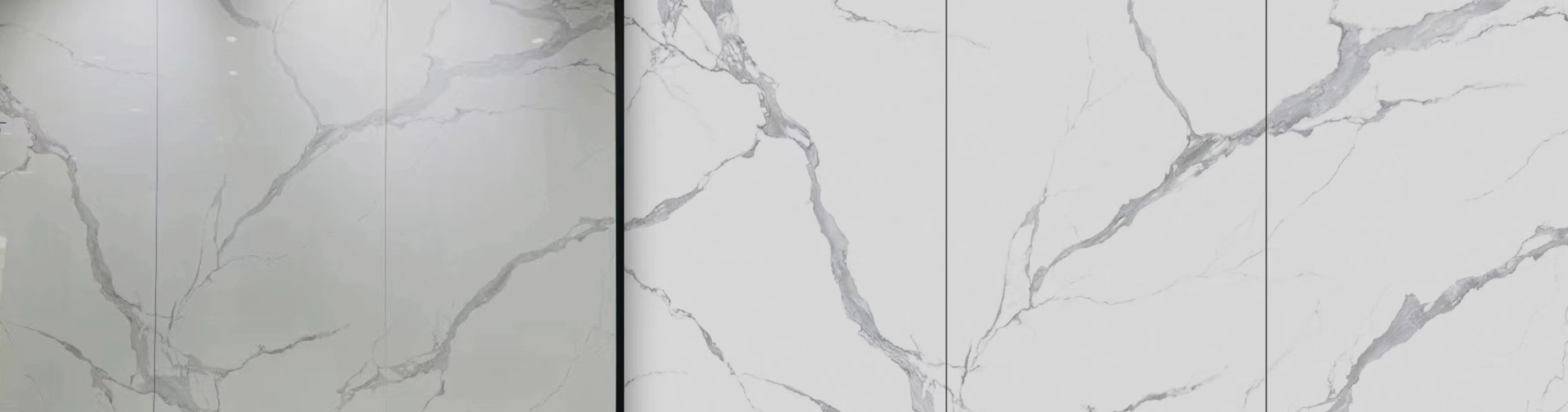
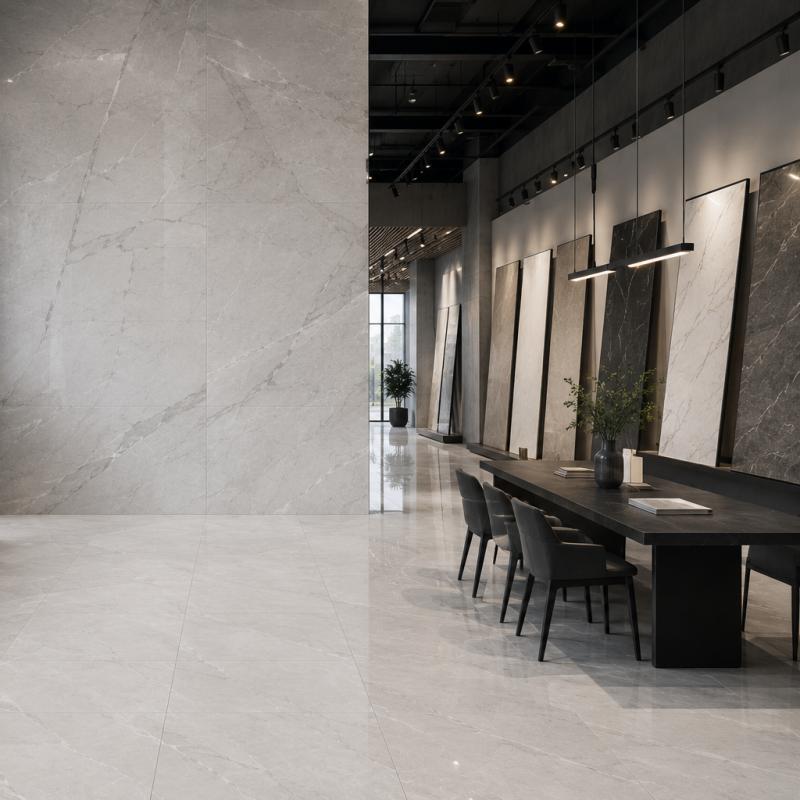
La arquitectura moderna tiende hacia líneas más limpias, espacios abiertos y superficies que parezcan lo más continuas posible. Al mismo tiempo, arquitectos y propietarios buscan materiales que combinen un diseño atractivo con durabilidad y fácil mantenimiento.Esta es una de las razones baldosas de porcelana de gran formato Se han vuelto cada vez más populares en proyectos residenciales y comerciales modernos.Desde suelos de 600 × 1200 mm hasta losas de porcelana aún mayores, los formatos más grandes están transformando la manera en que los diseñadores abordan paredes, suelos, baños, cocinas, hoteles y espacios comerciales. Pero, ¿son los azulejos de gran formato simplemente una tendencia de diseño actual, o podrían convertirse en una parte fundamental del futuro de la arquitectura?La respuesta probablemente se encuentre en un punto intermedio. El gres porcelánico de gran formato no sustituirá a todos los azulejos tradicionales, pero su combinación de estética, rendimiento y versatilidad lo convierte en una excelente opción para el diseño arquitectónico moderno. ¿Por qué se están volviendo tan populares los azulejos de porcelana de gran formato?Una de las principales razones de la popularidad de los azulejos de gran formato es sencilla: crean una superficie más continua.Las baldosas pequeñas tradicionales generan más juntas, que dividen naturalmente un piso o pared en secciones más pequeñas. Las baldosas grandes reducen estas interrupciones visuales y permiten que el material en sí se convierta en el elemento visual principal.Esto funciona especialmente bien con los estilos minimalistas y contemporáneos tan populares hoy en día.Una superficie de gran formato con aspecto de hormigón puede crear una apariencia industrial limpia. Un diseño inspirado en la piedra puede aportar una sensación natural a un interior moderno. Mientras tanto, Azulejos de porcelana con aspecto de mármol Puede ofrecer la apariencia del mármol natural sin requerir el mismo nivel de mantenimiento que algunas superficies de piedra natural.Dado que la arquitectura moderna sigue favoreciendo la simplicidad, los formatos de baldosas más grandes encajan de forma natural en esta tendencia de diseño. Menos juntas, mayor impacto visual.Una de las ventajas más notables de las baldosas grandes es la reducción de las juntas.Imagina dos pisos del mismo tamaño. Uno utiliza baldosas cuadradas pequeñas, mientras que el otro utiliza baldosas de 600 × 1200 mm. El primer piso tendrá muchas más juntas, creando un patrón de cuadrícula más marcado. El segundo tendrá menos interrupciones, lo que le dará al piso una apariencia más abierta y uniforme.Este efecto puede resultar especialmente útil en viviendas diáfanas, vestíbulos de hoteles, restaurantes y tiendas minoristas.Los grandes azulejos de porcelana para suelos pueden hacer que un espacio amplio se sienta más conectado, mientras que el acabado superficial adecuado puede reforzar el concepto de diseño general.Para los diseñadores que trabajan con interiores minimalistas, esto puede suponer una gran ventaja.El objetivo no suele ser que el suelo parezca complicado. En cambio, debe proporcionar un fondo limpio que permita que los muebles, la iluminación, la arquitectura y otros detalles destaquen. ¿Son adecuadas las baldosas grandes para espacios pequeños?Puede parecer lógico pensar que los azulejos grandes solo son adecuados para habitaciones grandes. Sin embargo, en realidad, también funcionan muy bien en espacios más pequeños.Un baño pequeño revestido con muchos azulejos pequeños puede resultar visualmente recargado debido a la cantidad de juntas. Los azulejos más grandes reducen esta fragmentación visual y pueden hacer que el espacio parezca más amplio.Por ejemplo, un 600×1200 mm Azulejo de pared de porcelana Se puede instalar verticalmente para resaltar la altura de un baño. El mismo formato instalado horizontalmente puede crear una mayor sensación de amplitud.Esto significa que el tamaño de las baldosas puede convertirse en parte de la estrategia de diseño arquitectónico.Por supuesto, el tamaño ideal depende de las dimensiones de la habitación, la distribución, las condiciones de instalación y el concepto de diseño. Grande no significa automáticamente mejor. La clave está en elegir un formato que se adapte al espacio. ¿Por qué los azulejos con apariencia de mármol son perfectos para grandes formatos?La piedra natural siempre ha sido popular en la arquitectura, pero el porcelanato de gran formato ha hecho que el diseño inspirado en la piedra sea mucho más accesible.La tecnología moderna de impresión digital permite a los fabricantes reproducir vetas de mármol detalladas, texturas de piedra, efectos de hormigón y otros patrones naturales en superficies de porcelana.Esto resulta especialmente eficaz cuando la baldosa es grande.Un diseño de mármol que luce atractivo en una baldosa de 600×600 mm puede resultar aún más impresionante en una superficie de 600×1200 mm, ya que se puede apreciar una mayor parte del diseño a la vez.Por ejemplo, los azulejos que imitan el mármol blanco pueden crear interiores luminosos y espaciosos, mientras que los diseños de piedra más oscuros pueden dar a los espacios comerciales u hoteleros una identidad visual más marcada.La ventaja no reside simplemente en la apariencia. La porcelana también proporciona una superficie duradera, adecuada para numerosas aplicaciones cotidianas.Esta combinación de estética basada en materiales naturales y funcionalidad práctica es una de las principales razones por las que la porcelana de gran formato sigue atrayendo a los diseñadores. Los azulejos de gran formato no son solo para suelos.Cuando la gente piensa en baldosas de porcelana de gran formato, a menudo lo primero que piensa es en suelos.Sin embargo, los muros están adquiriendo cada vez más importancia.El uso de azulejos de porcelana de gran formato permite crear una apariencia más uniforme entre el suelo y las paredes. Un diseño que imite el mármol, por ejemplo, puede extenderse desde el suelo del baño hasta la pared, logrando un interior más armonioso.Este enfoque es especialmente popular en baños, interiores de hoteles, áreas de recepción, paredes decorativas y cocinas modernas.Las grandes superficies de porcelana también se pueden utilizar para revestimientos de paredes, encimeras, tocadores y otras aplicaciones arquitectónicas, dependiendo del producto específico y del método de instalación.Como resultado, la porcelana está trascendiendo gradualmente el concepto tradicional de "baldosa para suelo" o "baldosa para pared".Se está convirtiendo en un material de revestimiento arquitectónico cada vez más extendido. ¿Qué hace que la porcelana sea adecuada para la arquitectura moderna?El diseño es solo una parte de la decisión. Un material utilizado en arquitectura también debe tener un buen rendimiento.La porcelana se utiliza ampliamente debido a su baja absorción de agua, durabilidad y resistencia al desgaste diario. Los productos de porcelana se definen generalmente por una tasa de absorción de agua del 0,5 % o inferior, según los estándares industriales de referencia.Esto hace que la porcelana sea especialmente útil para zonas expuestas a la humedad y al tránsito peatonal frecuente.Por ejemplo, las baldosas de porcelana se pueden utilizar en salas de estar, cocinas, baños, hoteles, restaurantes y muchos entornos comerciales.Al mismo tiempo, la porcelana requiere una limpieza rutinaria relativamente sencilla en comparación con muchos materiales naturales.Para arquitectos y promotores inmobiliarios, esta combinación es importante. Una superficie debe tener buen aspecto al instalarse, pero también debe seguir siendo práctica tras años de uso diario. ¿Qué hay de la instalación?Las baldosas de gran formato presentan un reto importante: su instalación requiere una mayor atención al detalle.Cuanto mayor sea el tamaño de la baldosa, más importante será la preparación del sustrato. Una superficie irregular puede dificultar la instalación y provocar desniveles visibles o un mal contacto entre la baldosa y el sustrato.Las baldosas grandes también pueden ser más pesadas y difíciles de manipular que los formatos más pequeños.Por este motivo, la instalación profesional es especialmente importante para la porcelana de gran formato.Antes de elegir un formato de baldosa grande, un proyecto debe considerar lo siguiente:Planitud del sustratoTamaño y peso de las baldosasAdhesivo adecuadoEquipos de manipulaciónDiseño conjuntoRequisitos de corteAcceso al sitioExperiencia como instaladorEsto no significa que las baldosas de gran formato sean poco prácticas. Simplemente significa que el proceso de instalación debe planificarse adecuadamente.En muchos proyectos, las ventajas visuales justifican fácilmente la planificación adicional. ¿Son más caras las baldosas de gran formato?No necesariamente.El coste final de un proyecto de alicatado depende de mucho más que el precio por metro cuadrado. El tamaño de las baldosas, el material, el acabado de la superficie, los requisitos de producción, el transporte, la instalación y la cantidad del proyecto influyen en el coste total.Las baldosas de gran tamaño pueden requerir una instalación más especializada, pero también pueden reducir el número de juntas de lechada y crear un acabado que, de otro modo, requeriría combinaciones de materiales más complejas.Para los compradores mayoristas y los proyectos comerciales, las especificaciones del producto y el volumen de compra también son factores importantes.Al comparar proveedores de baldosas de porcelana de gran formato, los compradores deben ir más allá del precio unitario y considerar la absorción de agua, la disponibilidad de tamaños, el acabado de la superficie, el embalaje, la consistencia de la calidad y la capacidad de producción.En proyectos de gran envergadura, la coherencia entre los distintos lotes puede ser tan importante como el presupuesto inicial. ¿Sustituirán los azulejos tradicionales a los de porcelana de gran formato?Probablemente no.Los formatos tradicionales de cerámica y porcelana aún conservan muchas ventajas.Las baldosas más pequeñas pueden ser más fáciles de manipular y cortar, y a menudo son más adecuadas para diseños complicados, patrones decorativos, baños pequeños y áreas con muchas esquinas o cambios de dirección.Los azulejos de gran formato son simplemente otra opción.De hecho, el futuro del diseño de azulejos probablemente implicará una combinación de diferentes formatos.Un hotel moderno podría utilizar grandes baldosas de porcelana en el vestíbulo principal, baldosas más pequeñas en los baños de los huéspedes, detalles de mosaico en áreas seleccionadas y azulejos decorativos en las paredes de los restaurantes o las áreas de recepción.El objetivo no es hacer que cada superficie sea lo más grande posible.El objetivo es seleccionar el formato adecuado para cada parte del edificio. Entonces, ¿son los azulejos de porcelana de gran formato el futuro?Aunque las baldosas de porcelana de gran formato no sustituyan por completo a los formatos de baldosas tradicionales, su creciente papel en la arquitectura moderna es innegable.Se integran a la perfección en el diseño contemporáneo, ya que crean superficies más limpias, reducen las interrupciones visuales y ofrecen una amplia gama de estilos. Al mismo tiempo, la porcelana proporciona la durabilidad y el rendimiento práctico necesarios para el uso diario en entornos residenciales y comerciales.El desarrollo de la impresión digital también está ampliando las posibilidades. Los diseñadores ahora pueden elegir entre superficies decorativas que imitan el mármol, la piedra, el hormigón, la madera y otros materiales, sin limitarse al aspecto de los productos cerámicos tradicionales.Por lo tanto, es probable que el futuro no consista en hacer las baldosas más grandes simplemente por el hecho de aumentar el tamaño.En cambio, se tratará de crear Mejores baldosas de gran formato: diseños más realistas, mayor variedad de tamaños, mayor uniformidad en la fabricación, soluciones de instalación prácticas y superficies que se integran a la perfección entre suelos, paredes y otros elementos arquitectónicos.Para viviendas modernas, hoteles, locales comerciales y edificios de oficinas, esa combinación convierte al porcelanato de gran formato en algo más que una moda pasajera.Puede que no sea el único futuro de la arquitectura, pero es muy probable que sea una parte importante del mismo. Preguntas frecuentes1. ¿Qué son las baldosas de porcelana de gran formato?Los azulejos de porcelana de gran formato son baldosas de mayor tamaño diseñadas para crear superficies más continuas con menos juntas. Los tamaños más comunes incluyen 600 × 600 mm, 600 × 1200 mm y formatos aún mayores utilizados para suelos y paredes modernos.2. ¿Son adecuados los azulejos de porcelana de gran formato para proyectos residenciales?Sí, los azulejos de porcelana de gran formato se utilizan mucho en los hogares, incluyendo salas de estar, cocinas, baños y dormitorios. Pueden hacer que los espacios parezcan más amplios, a la vez que ofrecen durabilidad y fácil mantenimiento.3. ¿Son mejores las baldosas de porcelana de gran formato que las baldosas de tamaño tradicional?Los azulejos de porcelana de gran formato ofrecen ventajas como menos juntas, un aspecto más limpio y un mayor impacto visual. Sin embargo, el tamaño ideal depende del diseño del proyecto, las condiciones de instalación y los requisitos de aplicación.4. ¿Se pueden utilizar baldosas de porcelana de gran formato tanto en suelos como en paredes?Sí, los azulejos de porcelana de gran formato se pueden usar tanto para pisos como para paredes. Se instalan comúnmente en baños, hoteles, espacios comerciales, paredes decorativas y proyectos de interiorismo modernos. 5. ¿Qué se debe tener en cuenta al instalar baldosas de porcelana de gran formato?La correcta preparación del sustrato, la instalación profesional, el uso de un adhesivo adecuado y un manejo cuidadoso son fundamentales para la instalación de baldosas de porcelana de gran formato. Las baldosas de mayor tamaño requieren mayor atención para garantizar un acabado liso y duradero.
 ¿Son los azulejos de porcelana de gran formato el futuro de la arquitectura moderna?









 IPv6 RED SOPORTADA